Shama, Ghana | 5 June 2026
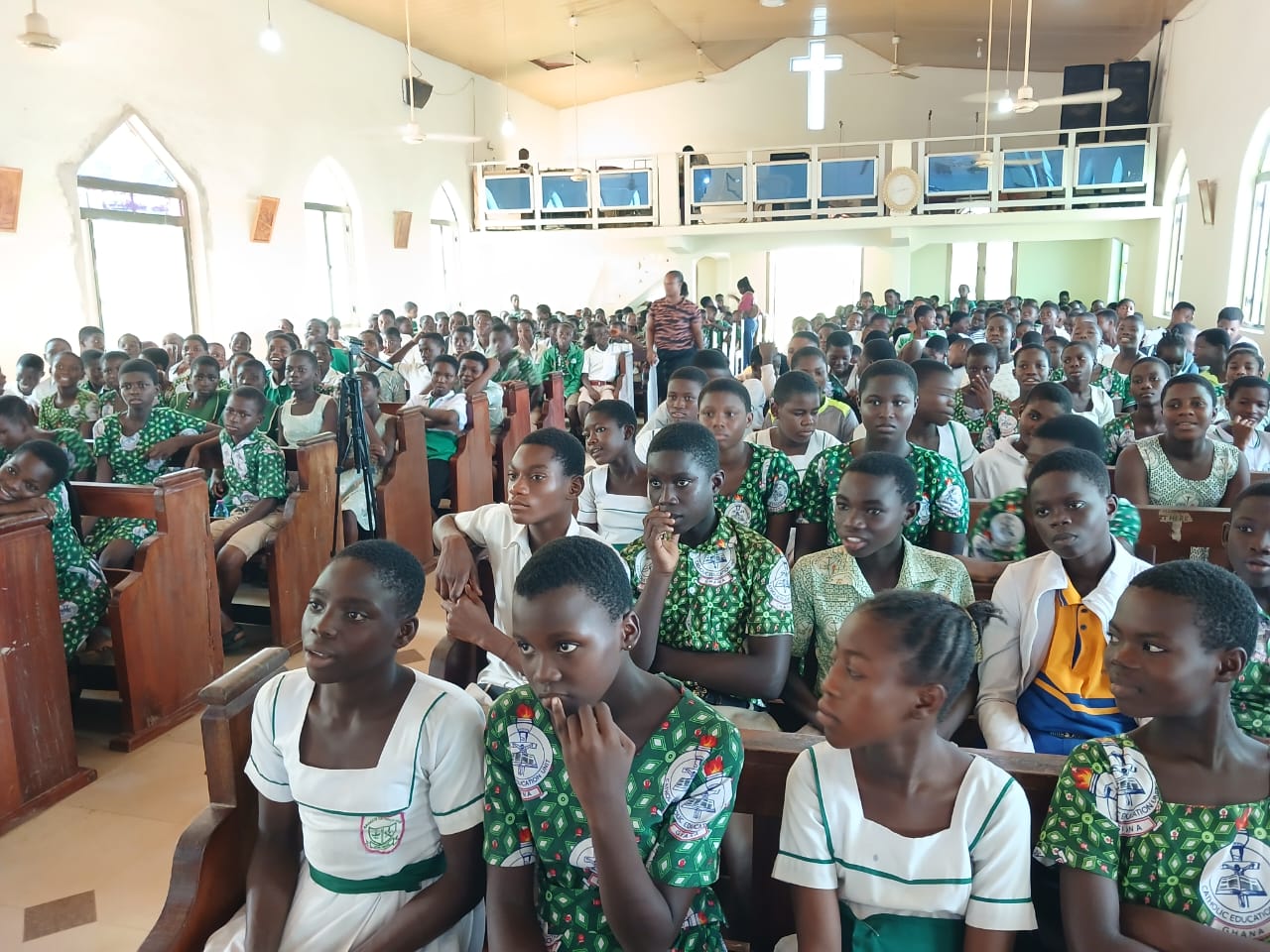
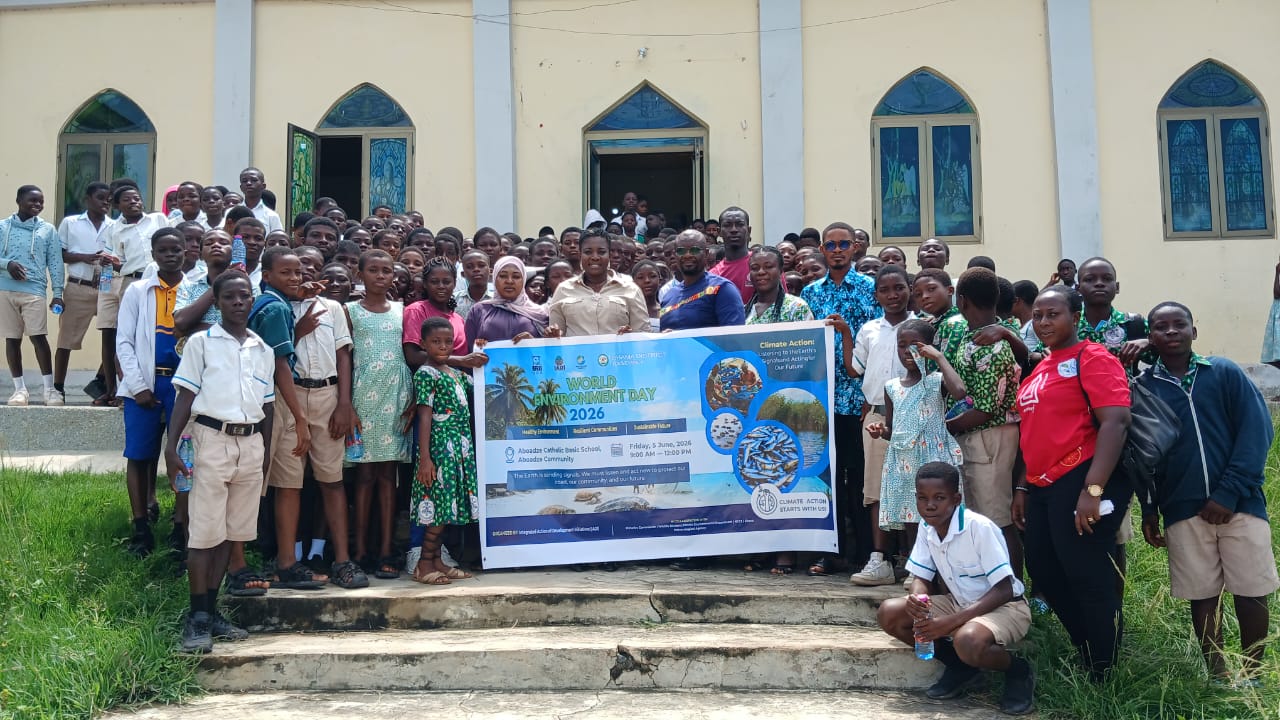
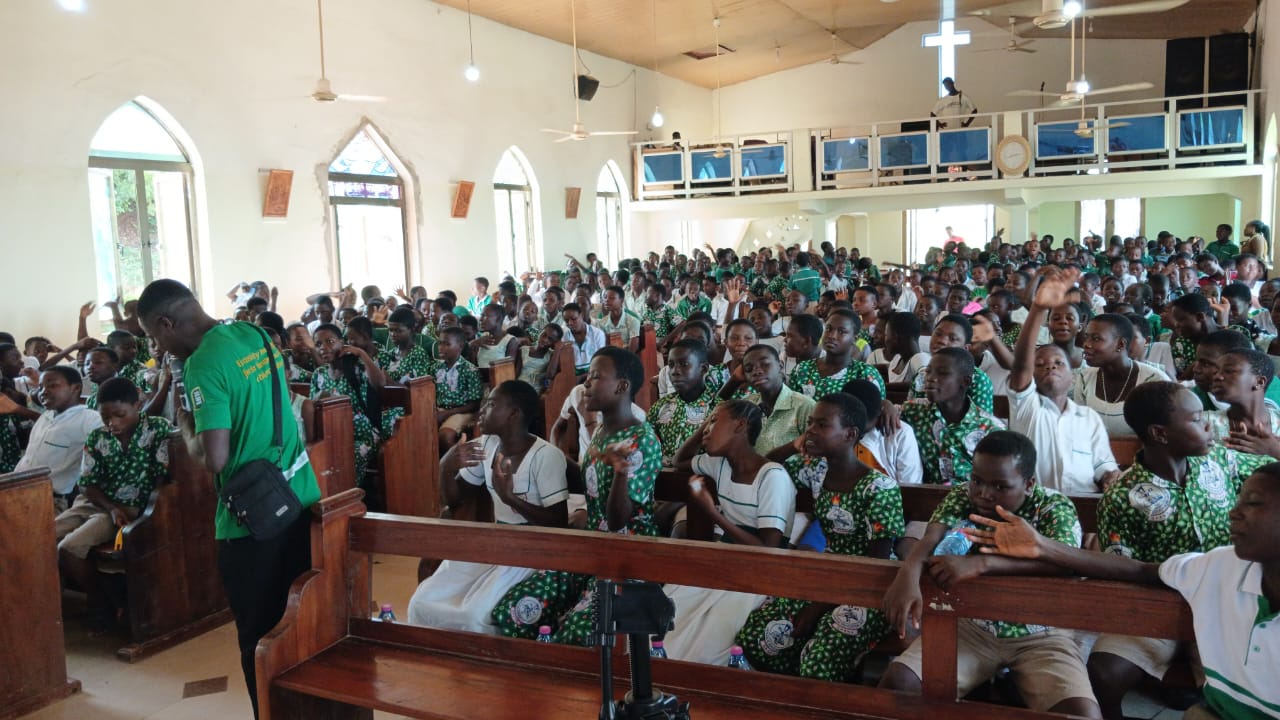
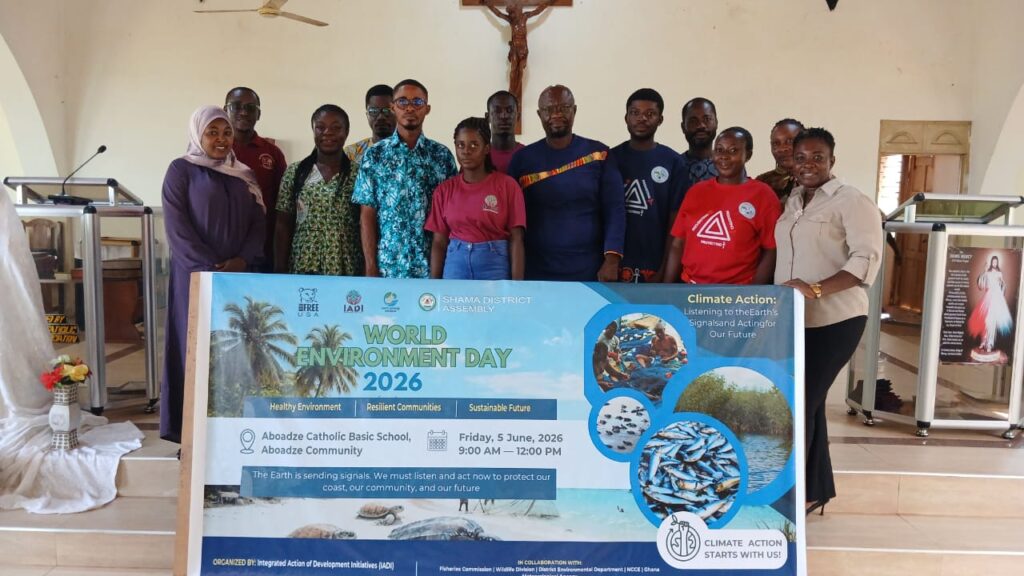
More than 350 students gathered at Aboadze Catholic Basic School on 5 June 2026 to mark World Environment Day under the global theme “Climate Action: Listening to the Earth’s Signals and Acting for Our Future.”
The event was part of the Plastic Pollution and Coastal Species Pilot (PPCSP) Project, a collaborative initiative funded by Born Free USA and implemented by the Integrated Agricultural Development Initiative (IADI), Earth Synergy Initiative (ESI) and the Shama District Assembly, with support from the Fisheries Commission, the National Commission for Civic Education, NADMO and other local partners.
Through presentations and hands-on discussions, students explored how climate change is already reshaping coastal life in Ghana through shifting weather patterns, flooding, coastal erosion and declining fish stocks, and what actions they can take as stewards within their schools, homes and communities.
Why This Matters for Shama
For many, World Environment Day is an opportunity to celebrate nature. In Shama, it is also a reminder of what is at stake.
The district’s beaches, mangroves, estuaries and fisheries are closely connected, and increasingly under pressure. Plastic pollution, mangrove degradation and declining fish stocks threaten not only local biodiversity but the livelihoods and food security of communities that depend on a healthy coast. Many of these pressures originate far beyond Shama’s boundaries, making coordinated, evidence-led responses all the more necessary.
Recognising that these challenges are deeply interconnected, partners launched the PPCSP project and the broader Shama Regenerative Transition (SRT) initiative to better understand the local system and identify practical solutions that strengthen both environmental sustainability and community resilience.
From Research to Action
A defining feature of this initiative is its commitment to grounding action in local evidence.
Over the past several months, project teams have worked with communities, local authorities and technical experts to build a clearer picture of the environmental, social and economic forces shaping the district. This has included a district-wide situational analysis, stakeholder consultations, ecological assessments and community engagement processes designed to generate the evidence needed to guide decision-making.
The findings have been striking. A sea turtle habitat assessment identified sections of Apo and Anlo beaches as retaining characteristics suitable for marine turtle nesting, while also documenting threats including plastic pollution, coastal erosion, vegetation degradation and pollution linked to activities along the wider Pra River system. A mangrove ecosystem assessment confirmed the ecological significance of local mangrove systems, which support fisheries, biodiversity, shoreline protection and community livelihoods, while identifying mangrove cutting, burning and pollution as pressures requiring urgent attention.
These findings point to a simple but important truth: protecting coastal biodiversity is not just about protecting wildlife. Healthy beaches, mangroves and marine ecosystems support food security, climate resilience and the daily lives of the people who live alongside them.
World Environment Day therefore served not only as an awareness event, but as part of a broader process of sharing knowledge, validating findings and building support for locally led solutions. Alongside the school outreach, the project is implementing community consultations, behaviour-change campaigns, ecological monitoring and pilot interventions aimed at reducing plastic pollution and strengthening coastal stewardship across the district.
Looking Ahead
The pilot phase of the PPCSP project runs through October 2026. In the months ahead, partners will continue testing and refining solutions that address the root causes of environmental degradation while building local capacity and ownership. The lessons generated will help shape future investments in a more resilient and regenerative Shama.
World Environment Day 2026 was a reminder that the Earth is sending signals. The challenge now is to listen, learn and act — because protecting Shama’s beaches, mangroves, fisheries and communities is not simply about conserving nature. It is about safeguarding the future of Shama itself.
The PPCSP Project is funded by Born Free USA and implemented in partnership with IADI, ESI, the Shama District Assembly and local government agencies.